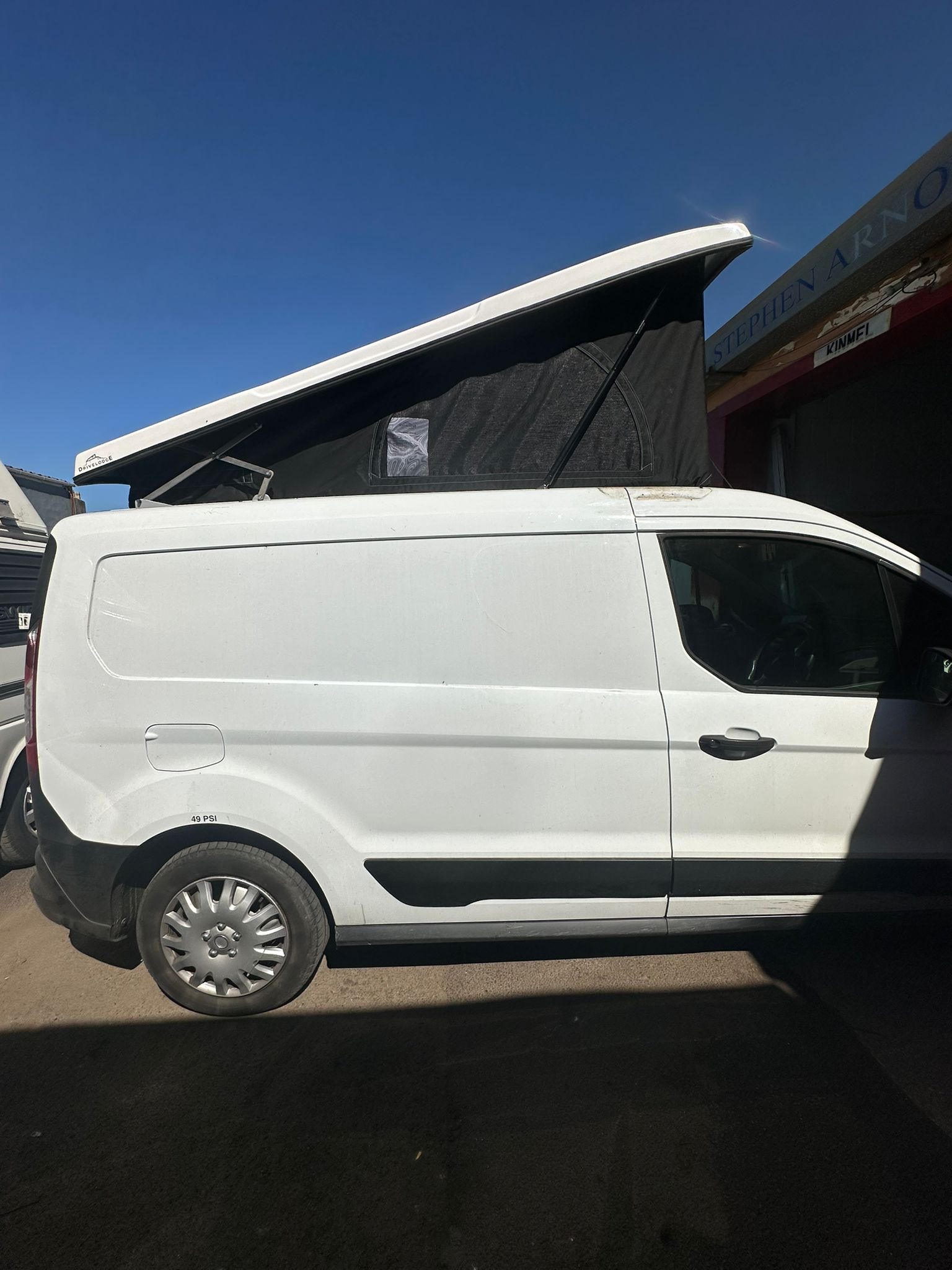
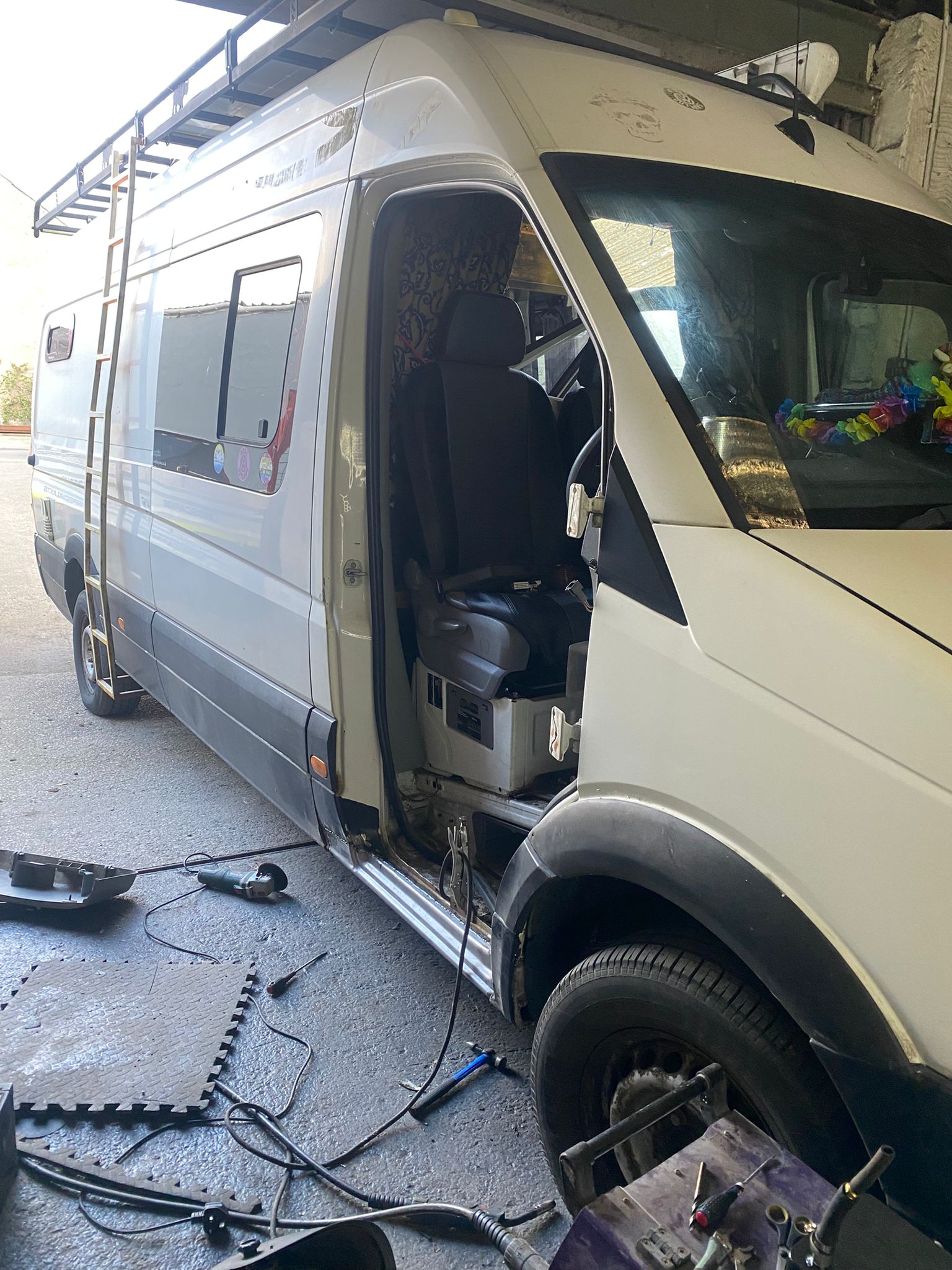
For many campervan owners, the first MOT after a build feels routine.
The van looks complete. Everything works. It has already been driven without issue.
However, MOT failures after campervan builds are far more common than most people expect. This is especially true after DIY work or budget-led conversions.
In most cases, failure does not come from one major defect. Instead, it results from several small decisions that only become problematic when viewed through a compliance and safety lens.
An MOT does not assess comfort, layout, or lifestyle features.
It assesses whether a vehicle is safe, legal, and roadworthy on UK roads.
That difference often catches owners by surprise.
This article explains why many campervan builds fail their first MOT, what experienced workshops see repeatedly, and how these issues can be avoided with better awareness early on.
The gap between “conversion complete” and MOT-ready

One of the most common misconceptions in campervan ownership is assuming that a finished interior equals a compliant vehicle.
In reality, many popular conversion choices sit close to regulatory limits. This can be true even when the work appears tidy and well thought out.
An MOT tester does not view a campervan as a living space.
Instead, they assess it as a modified road vehicle.
That means changes to structure, electrics, weight distribution, and visibility all matter.
This difference in perspective is where most first-time MOT failures begin.
Seats, seatbelts, and mounting points
Why this area causes MOT failures
Seats and seatbelts are one of the most common failure points for campervan builds.
Problems usually arise when seats are added or repositioned without full consideration of structural requirements.
Typical issues include:
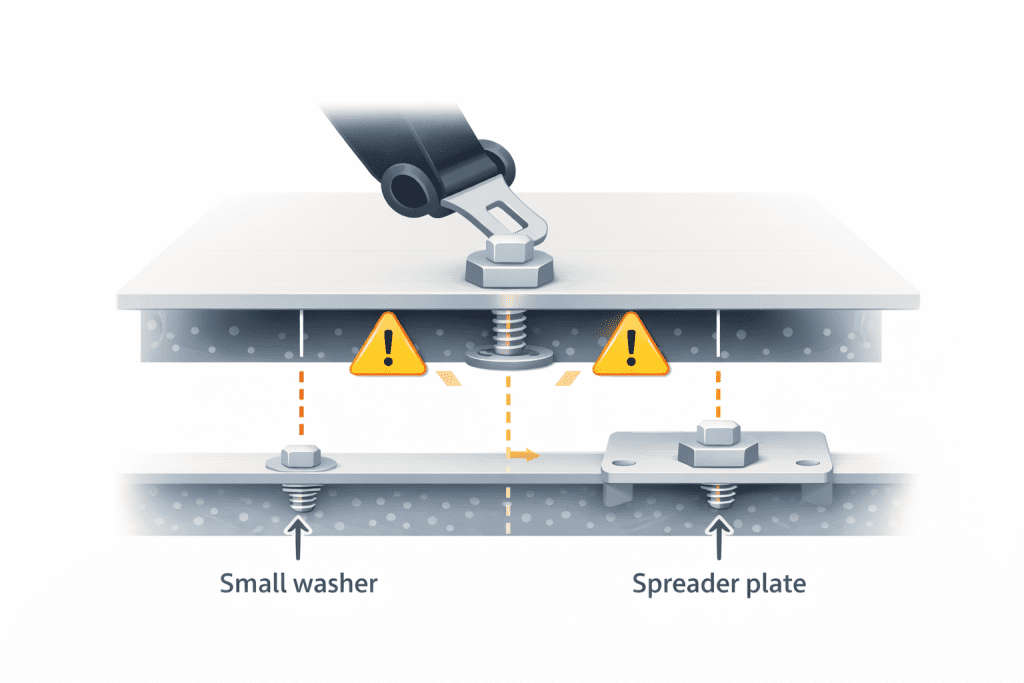
- Inadequate reinforcement beneath the floor
- Incorrect or improvised mounting points
- Seatbelt anchorages that lack proper strength
Even when seats feel solid during normal use, MOT testers look for signs of weakness, corrosion, or poor load distribution.
What testers actually assess
Seatbelts are not assessed on presence alone.
Testers examine their condition, alignment, security, and mounting strength.
Improvised brackets, thin spreader plates, or poorly protected fixings often raise concerns. In some cases, they lead directly to failure.
Electrical installations that raise MOT concerns
Leisure electrical systems are not performance-tested during an MOT.
However, how they are installed matters greatly.
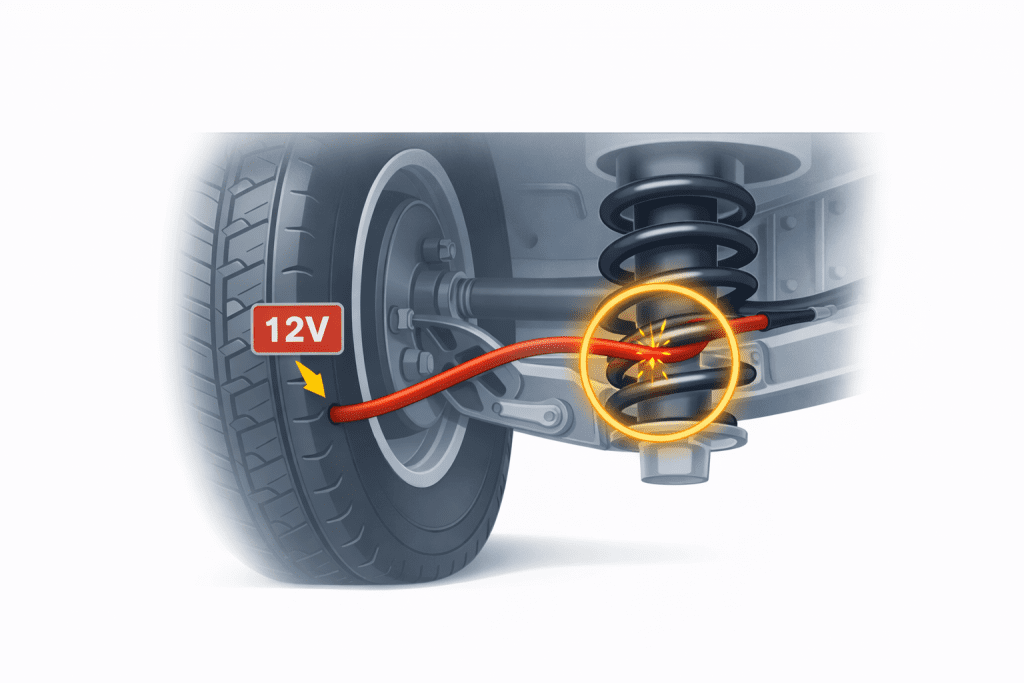
Most electrical-related issues come from poor routing or protection rather than faulty components.
Common problems include:
- Cables routed near steering or suspension parts
- Batteries that are poorly secured
- Sharp edges close to terminals or wiring
- Aftermarket systems interfering with vehicle electronics
In practice, these issues arise because campervan electrics are often designed for static use. Vehicles, however, move, flex, and vibrate constantly.
From an MOT perspective, anything that presents a foreseeable safety risk can trigger an advisory or failure.
Lighting, visibility, and exterior compliance

Lighting issues are one of the most frequent MOT failure points for converted vehicles.
These problems are rarely intentional.
Common causes include:
- Aftermarket lights wired incorrectly
- Brake lights partially blocked by bike racks
- Reflectors removed during bodywork
- Interior layouts reducing rear visibility
Curtains, furniture, and fixed partitions can all affect what a tester is required to assess.
Even practical living features can cause compliance issues if they interfere with lighting or visibility requirements.
Weight, suspension, and braking imbalance
How weight issues show up during an MOT
Weight-related problems rarely appear as a single obvious fault.
Instead, they show up indirectly.
MOT testers often notice:
- Rear suspension sag
- Uneven tyre wear
- Braking imbalance between axles
- Excessive body movement under braking
A campervan does not need to look overloaded for these issues to appear.
Being close to maximum limits is often enough.
Why builds struggle here
Problems commonly occur when builds prioritise:
- Heavy fixed furniture
- Large electrical systems
- Full water capacity
If suspension and axle loading are not reassessed, MOT issues become more likely.
Sharp edges, fixings, and interior safety
MOT testers also assess injury risk during normal vehicle use.
This is where many interior details matter more than owners expect.
Common issues include:
- Exposed metal edges
- Insecure furniture near seating areas
- Heavy items that are not restrained
- Access panels that could open under braking
Campervan interiors may feel safe in daily use.
However, the MOT views them as part of a moving vehicle rather than a static space.
Fuel systems, heat sources, and ventilation
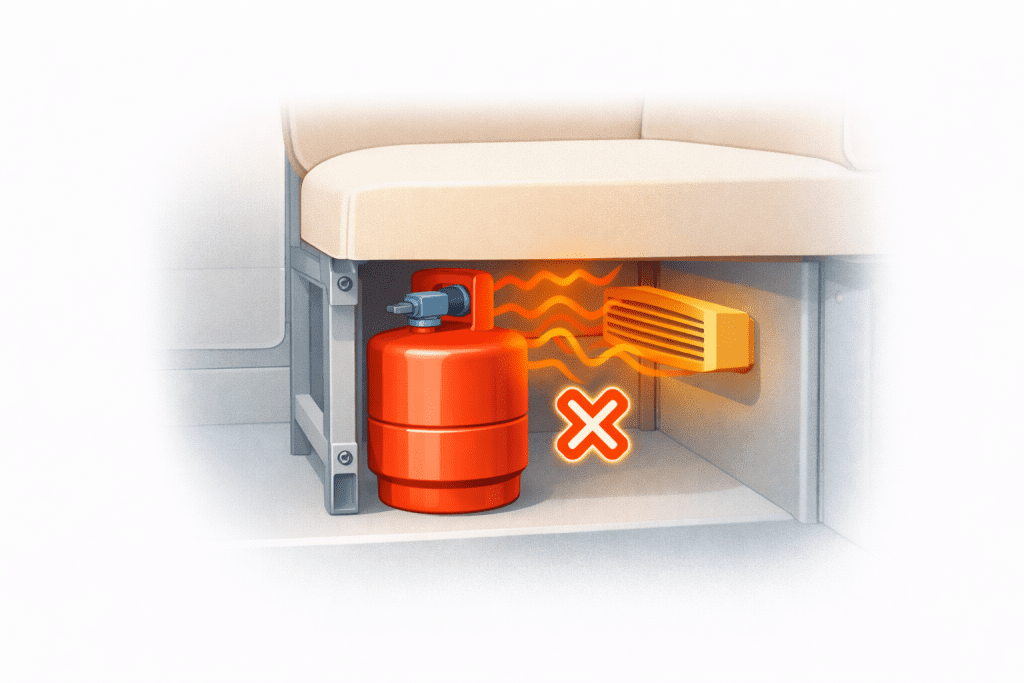
Gas systems themselves are not tested in detail during an MOT.
That said, associated risks are not ignored.
Testers may flag concerns where they see:
- Inadequate ventilation near heat sources
- Heat damage close to fuel or brake lines
- Poor shielding near exhaust components
Any modification that appears to interfere with safe vehicle operation can lead to closer inspection.
DIY builds and MOT reality
DIY campervan builds are not inherently unsafe.
However, they do carry a higher risk of MOT issues.
The reason is simple: UK regulations are not always intuitive.
Many DIY builders:
- Work from online examples rather than UK standards
- Focus on usability over compliance
- Do not view the van from an inspection perspective
As a result, vans often function well day to day but struggle during formal assessment.
UK-specific factors that amplify issues
Seasonal conditions
Winter driving exposes weaknesses that summer testing may not reveal.
Common problems include:
- Damp-affected wiring
- Corrosion around fixings
- Reduced braking efficiency under load
Road conditions
UK potholes, speed bumps, and uneven roads place constant stress on mounts and suspension.
Over time, marginal installations degrade faster than expected.
How Kinmel Campers approaches MOT readiness

From a professional workshop perspective, MOT failures are rarely down to bad luck.
In most cases, they trace back to earlier build decisions. Often, these decisions were made with good intentions but limited regulatory awareness.
At Kinmel Campers, MOT readiness is treated as a design consideration rather than a final hurdle.
The focus is on how modifications affect the vehicle as a whole. This includes structural integrity, mechanical behaviour, and legal compliance.
What consistently makes the difference
Vans that pass their first MOT cleanly usually share several traits:
- Conservative assumptions around weight
- Proper reinforcement and mounting methods
- Clean, protected installations
- Awareness of how MOT testers interpret regulations
Advice is often about avoiding marginal decisions rather than pushing limits.
What experienced owners do differently
Owners who have been through several MOT cycles tend to adapt their approach.
They usually:
- Leave safety margins rather than working to limits
- Keep records of modifications
- Re-evaluate their vans as usage changes
They understand that campervans evolve over time.
Compliance must evolve with them.
Decision clarity: why this matters before booking an MOT
A Campervan MOT should not be the first time problems come to light.
Ideally, it confirms that decisions made during planning and building were sound.
Understanding why campervan builds fail MOTs changes how owners approach:
- Layout decisions
- Budget priorities
- Material choices
- System design
It shifts the mindset from “Will it pass?” to “Is it genuinely road-ready?”
That shift alone prevents most first-time failures.
Further reading and practical resources

For owners who want to explore system-level decisions in more detail, independent reference material can be useful. This is especially true when researching components that directly affect weight, reliability, and day-to-day usability.
One such resource is Campervan Essential, an online store focused specifically on campervan equipment and accessories used in real-world camper life. Alongside products, it provides practical context around how different systems are typically used, installed, and combined.
For many owners, browsing equipment with an understanding of how it fits into a wider system helps clarify trade-offs between weight, performance, and long-term practicality before committing to changes.